Travel tips
Know beforeyou go.
The practical bits — trains, money, seasons and manners — from people who live here. Entry rules change: always confirm visa details on official sites.
(01) Getting around
Take the train.Seriously.
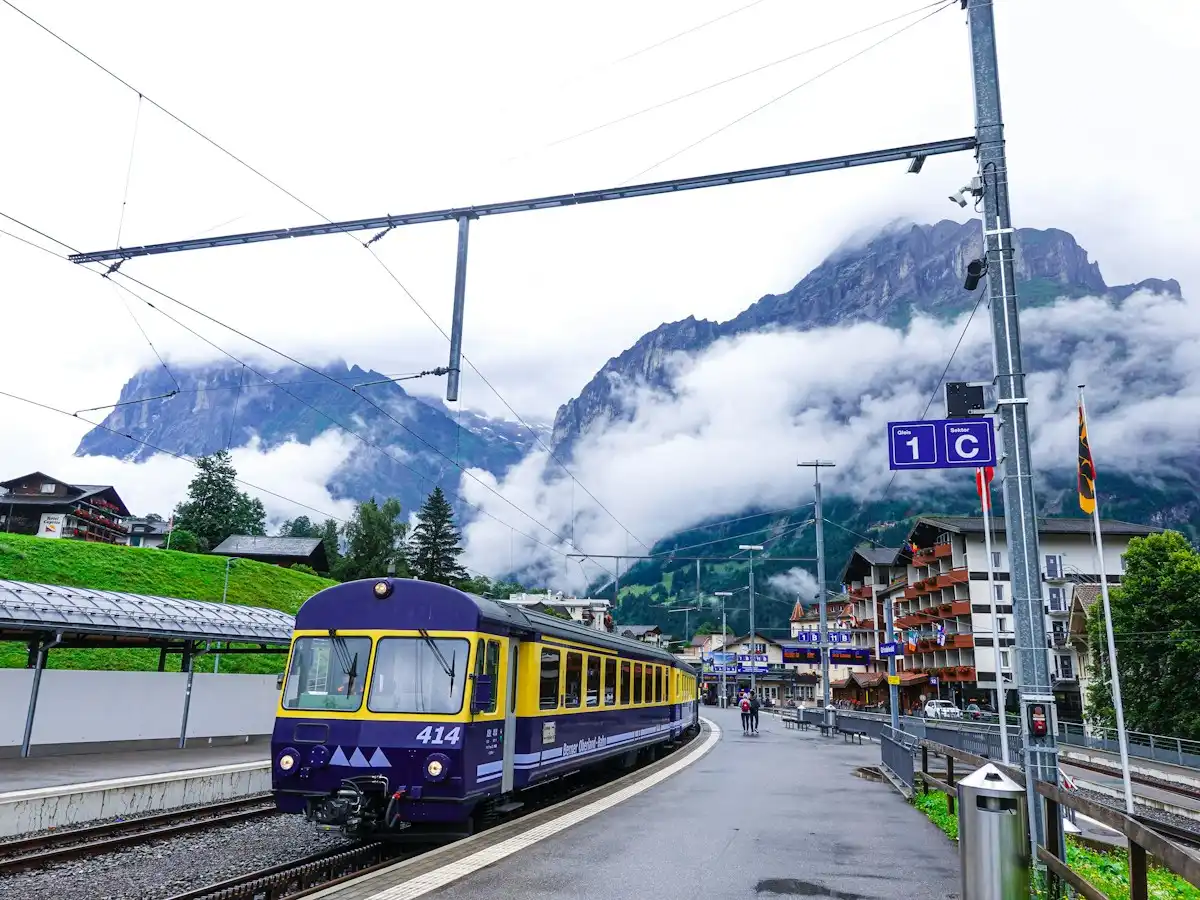
Trains, buses, boats and mountain railways run on one connected, clock-face timetable. You rarely wait more than a few minutes for a connection, and you never need a car.
Swiss Travel Pass
Unlimited travel on trains, buses and boats for 3, 4, 6, 8 or 15 consecutive days, plus free entry to many museums and discounts on most mountain railways.
Best for: moving most days, boats and scenic trains.
Half Fare Card
Pay once, then get about 50% off most train, bus, boat and many mountain tickets for a month.
Best for: staying in one or two bases with a few big excursions.
Download the SBB Mobile app
Timetables, platform changes and tickets for the whole network in one place.
Reserve the panoramic trains
Glacier Express and Bernina Express need a paid seat reservation, even with a pass.
Send your luggage ahead
Rail luggage services forward suitcases between stations so you travel with just a daypack.
Look for the yellow signs
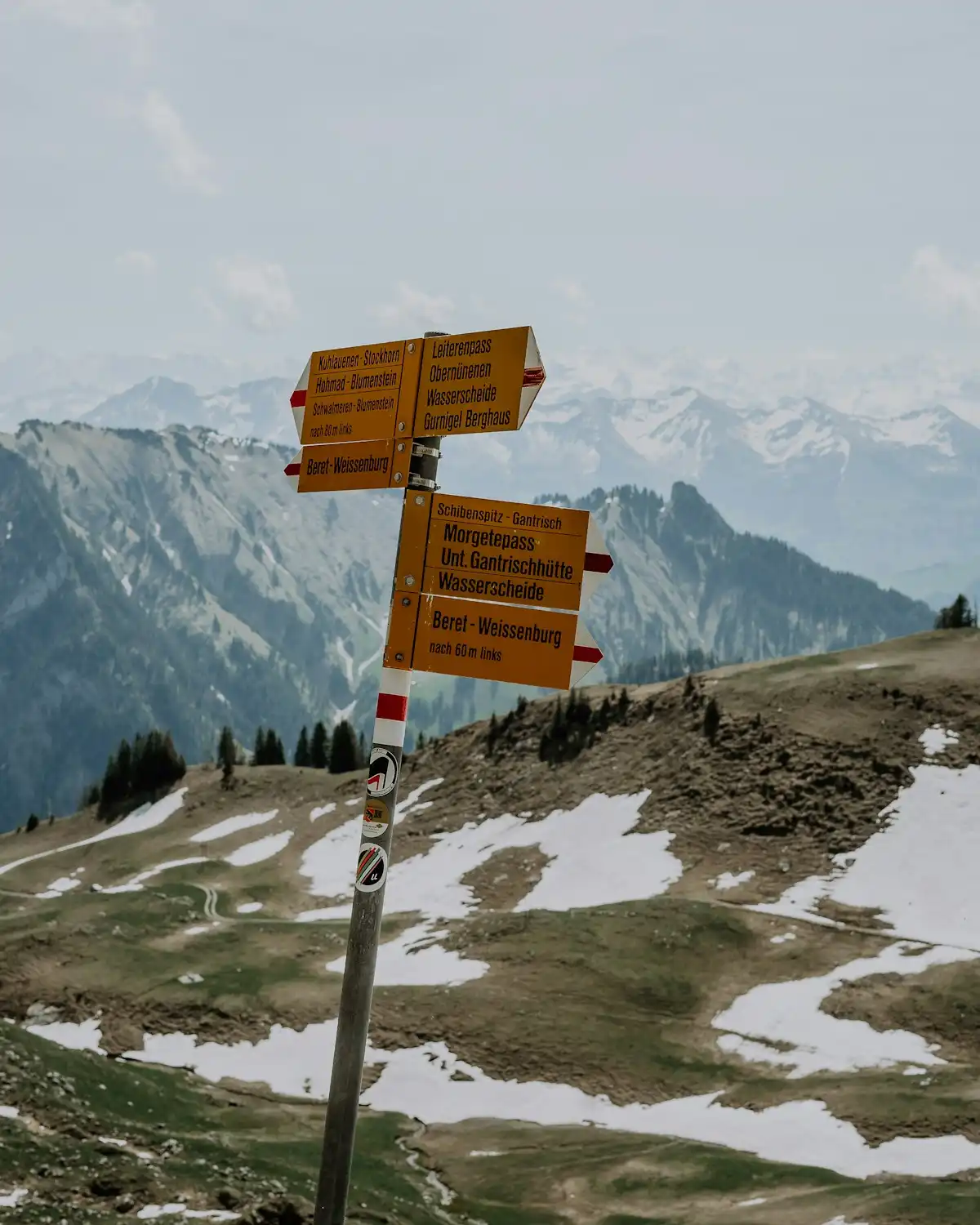
Hiking routes are marked with yellow signposts showing walking times, not distances. They are reliable.
(02) Money
Francs, not euros.
Currency
Swiss franc (CHF). Some places accept euros, but change comes back in francs at a poor rate.
Cards
Visa, Mastercard and contactless phone payments work almost everywhere, including most mountain huts.
Cash
Carry a little for farm shops, honesty boxes and small huts.
Tipping
Service is included by law. Rounding up or adding 5–10% for great service is appreciated, never expected.
(03) Entry & visas
Schengen rules apply.
Always check official sources
Entry requirements depend on your nationality and change over time. Confirm the current rules with the Swiss State Secretariat for Migration (SEM) or your nearest Swiss embassy before you book flights.
Switzerland is in Schengen, not the EU
It applies the common Schengen visa rules. Many visitors, including citizens of the US, Canada, the UK and Australia, can usually stay up to 90 days in any 180-day period without a visa.
Passports
Visitors from outside the EU/EFTA generally need a passport valid for at least three months beyond their planned departure from the Schengen Area, issued within the last ten years.
New digital entry systems
The EU Entry/Exit System (EES) registers non-EU travellers at Schengen borders, and a pre-travel authorisation (ETIAS) for visa-exempt travellers is planned. Check whether ETIAS applies before your trip.
Travel insurance
Healthcare is excellent and expensive. We require insurance that covers mountain rescue and medical repatriation.
(04) Seasons
When to go.
Every season works — for different things. Mountain weather can change within an hour at any time of year.
Dec — Mar
Winter−5 to 5°C valleys
Skiing, sledging, Glacier Express in snow, Christmas markets
Many high hiking trails closed
Apr — May
Spring8 to 18°C
Lakes, cities, blossom in Ticino and Lavaux
High passes still snowbound; some lifts close for maintenance
Jun — Aug
Summer18 to 28°C valleys
Hiking, lake swims, all mountain railways open
Busiest season; book trains and huts early
Sep — Oct
Autumn8 to 20°C
Clear air, golden larches, cattle descents, grape harvest
Our favourite: fewer people, stable weather
Nov
Late autumn0 to 10°C
Cities, museums, thermal baths
Quietest month; many mountain lifts closed
(05) Etiquette
Quiet, tidy, on time.
Be punctual
Five minutes late is late. Trains leave on the minute.
Sunday is quiet
No laundry, mowing or loud music — many neighbourhoods take this seriously.
Recycle properly
Glass, PET bottles and paper are separated; bins on trains and at stations show which is which.
Greet people
Say hello in shops and on trails: “Grüezi” in the German-speaking areas, “Bonjour” in the French.
On the trail
Close gates behind you, keep dogs on a lead near cattle and give cows with calves plenty of room.
(06) Packing
Layers. Always layers.
- 01Waterproof shell jacket
- 02Warm mid-layer, even in July
- 03Broken-in walking shoes with grip
- 04Sunglasses and SPF 50 — glacier glare is strong
- 05Swimwear for lakes and spas
- 06Type J plug adapter (Type C plugs also fit)
- 07Refillable water bottle
- 08Small daypack for travel days
- 09A sense of humour about weather
(07) Budget
What things cost.
Switzerland is expensive, but a pass, a picnic and tap water keep it sane. Typical prices, as a rough guide:
| Coffee in a café | CHF 4.50 – 6 |
|---|---|
| Lunch menu of the day | CHF 20 – 30 |
| Fondue dinner per person | CHF 30 – 45 |
| Mid-range double room | CHF 200 – 350 |
| Jungfraujoch return from Interlaken | CHF 200+ (discounts with passes) |
| Bottle of water, supermarket | CHF 1 – 2 (tap water is free and excellent) |
(08) Essentials
Good to know.
- Emergency
- 112 (general) · 144 ambulance · 117 police · 118 fire · 1414 Rega air rescue
- Languages
- German, French, Italian and Romansh
- Time zone
- CET (UTC+1), CEST in summer (UTC+2)
- Power
- 230 V, 50 Hz · Type J sockets
- Water
- Tap and most fountain water is drinkable
- Capital
- Bern (the “federal city”)
If you plan to move most days and take boats and mountain trains, usually yes: it covers trains, buses, boats and many museums, plus discounts on most mountain railways. If you will stay in one place, the Half Fare Card (50% off most tickets for a month) is often cheaper. Price both against your actual route.
Yes. Swiss tap water is clean and tested, and public fountains marked without a “Kein Trinkwasser / Eau non potable” sign are safe to drink from. Bring a bottle.
German in the north and centre, French in the west, Italian in Ticino and Romansh in parts of Graubünden. English is widely spoken in tourist areas. A “Grüezi”, “Bonjour” or “Buongiorno” goes a long way.
Mostly not. Supermarkets at large train stations and airports stay open, as do many shops in tourist resorts. Plan picnics on Saturday.